A Journey with Christ

A Journey with Christ

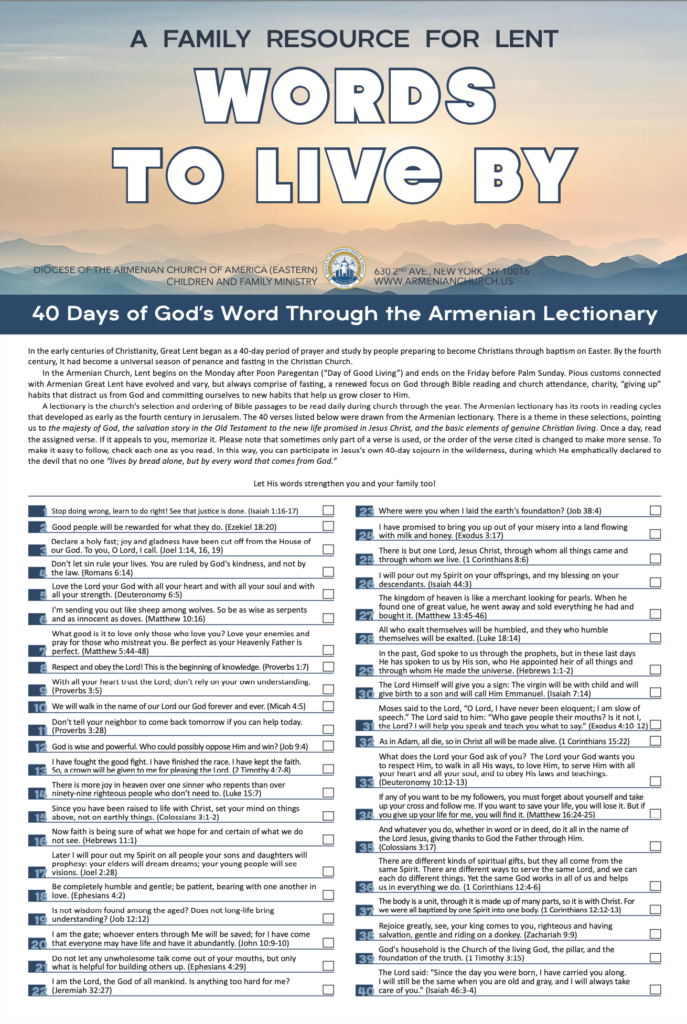
40 Days of God’s Word Through the Armenian Lectionary

In the early centuries of Christianity, Great Lent began as a 40-day period of prayer and study by people preparing to become Christians through baptism on Easter. By the fourth century, it had become a universal season of penance and fasting in the Christian Church.

In the Armenian Church, Lent begins on the Monday after Poon Paregentan (“Day of Good Living”) and ends on the Friday before Palm Sunday. Pious customs connected with Armenian Great Lent have evolved and vary, but always comprise of fasting, a renewed focus on God through Bible reading and church attendance, charity, “giving up” habits that distract us from God and committing ourselves to new habits that help us grow closer to Him.

A lectionary is the church’s selection and ordering of Bible passages to be read daily during church through the year. The Armenian lectionary has its roots in reading cycles that developed as early as the fourth century in Jerusalem. The 40 verses listed below were drawn from the Armenian lectionary. There is a theme in these selections, pointing us to the majesty of God, the salvation story in the Old Testament to the new life promised in Jesus Christ, and the basic elements of genuine Christian living.

Once a day, read the assigned verse. If it appeals to you, memorize it. Please note that sometimes only part of a verse is used, or the order of the verse cited is changed to make more sense. To make it easy to follow, check each one as you read. In this way, you can participate in Jesus’s own 40-day sojourn in the wilderness, during which He emphatically declared to the devil that no one “lives by bread alone, but by every word that comes from God.”

Download our
Free E-Book

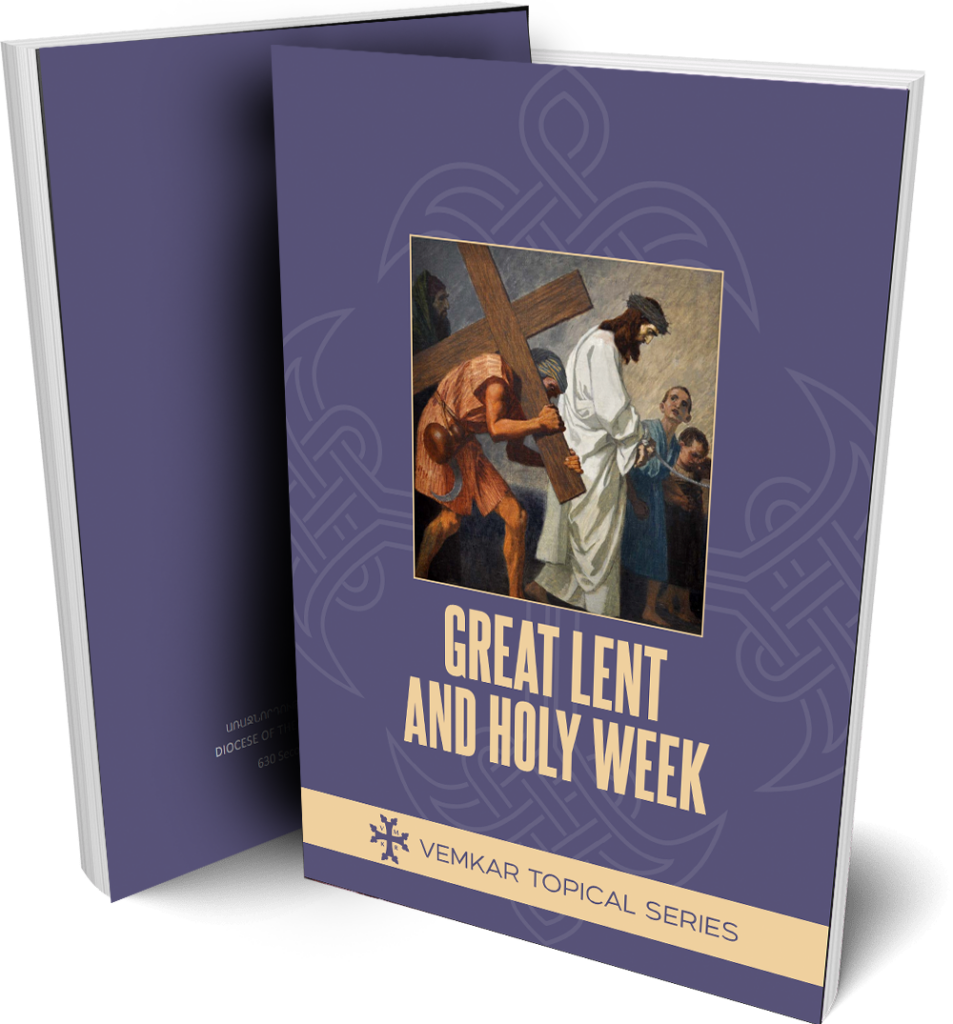
This Lenten book provides a deep reflection on the Sundays of Great Lent, guiding readers through their spiritual meaning and significance.

Do not worry, we won't spam your email inbox.

The principles and practices of Lent in the Armenian Church are deeply rooted in the Bible, the ancient Christian traditions, the life-example of Christ and His disciples, and the lives of the great church fathers, all of whom contributed to the establishment of the canons of Lent. The focus of Lent is on “Mankind the Sinner”: on the repentance, spiritual cleansing, and eventual salvation of human beings. The following biblical passages elaborate the deeper meaning of Lent: “Even now, declares the Lord, return to me with all your heart, with fasting and weeping and mourning. Rend your heart and not your garments. Return to the Lord your God” (Joel 2:12-13). 

“When you pray, do not be like the hypocrites, for they love to pray standing in the synagogues and on the street corners, to be seen by men. Verily I say unto you, they have received their reward in full. But when you pray, go into your room, close the door, and pray to your Father, who is unseen. Then your Father, who sees what is done in secret, will reward you.”
Lenten Family Resources

Vemkar Lenten Series 2025

3 Videos