Mountains and high places hold a special place in human cultural consciousness because they are preferred by God as places to touch down and reveal Himself in the material world, perhaps because they are “above” the daily heaviness of responsibilities.
In the Old Testament, God established His Covenant with His people on Mount Horeb. He commanded that His abode be built on Mount Zion. During the time of the Judges, Deborah commanded Barak to climb Mount Tabor to receive help from God.
In the New Testament, the identity of God’s salvation was revealed on the same Mount Tabor, where the true identity of Jesus was shown, and finally on Mount Golgotha. There, the death of Jesus caused the curtain of the Temple to be rent in two, revealing what had been kept hidden, as we pray in the hymn of Psalm 95/96 in the Lauds on the morning of Good Friday: “that awesome and at the same time terrifying scene of the creator of heavens and earth hanging on a cross.”
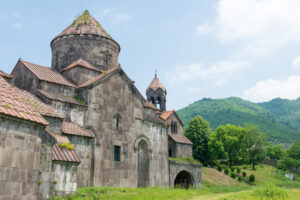
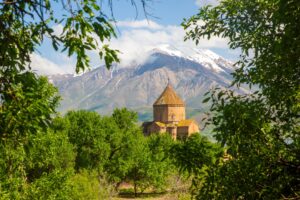
Our Armenian Highlands abound with mighty mountains, and we must seek their meaning in the revelations each summit brings of God’s saving power, which we expected to descend to us on the cart bearing the resurrected Jesus, as Saint Gregory of Narek describes in his odes. We should join “the risen youth with chestnut-colored hair, a broad chest, and a powerful voice of life” to race toward our goal of eternal life, where we will rejoice in our renewed nature within the communion of the Heavenly Father’s own life.
The Fathers of the Church describe the path to this communion as an ascent through repentance, which acquires its true meaning and dimension in the person of our Lord Jesus. He revealed the meaning of this mystery during His Last Supper with comforting words indicating that our true home was in the House of His and our Father. When Thomas asked how we can know the way to our home when we do not know where to go, Jesus answered, “I am the way.” (John 14.1–6)
It is clear, therefore, what the “repentance” is that the Fathers proclaim so vigorously. Repentance derives its true meaning not from the idea of “turning back” from evil, but from the reality of walking in the Lord. Only there do we find truth and life. These are the very words of Jesus.
The beginning and the end of every act of repentance are in our Lord Jesus. We must enter and remain in that field of gravity, which the summits of our mountains delineate, the home of our Father.